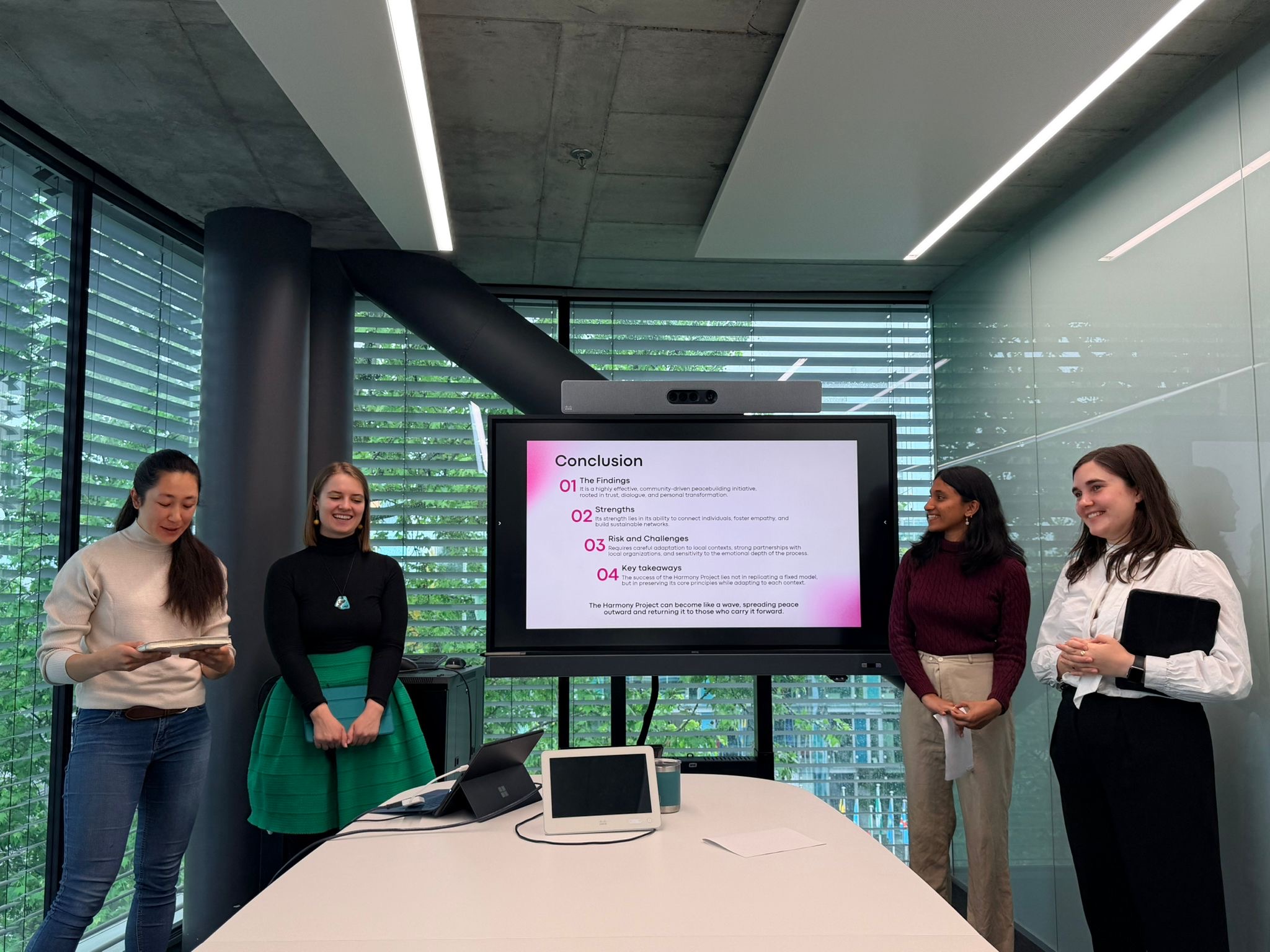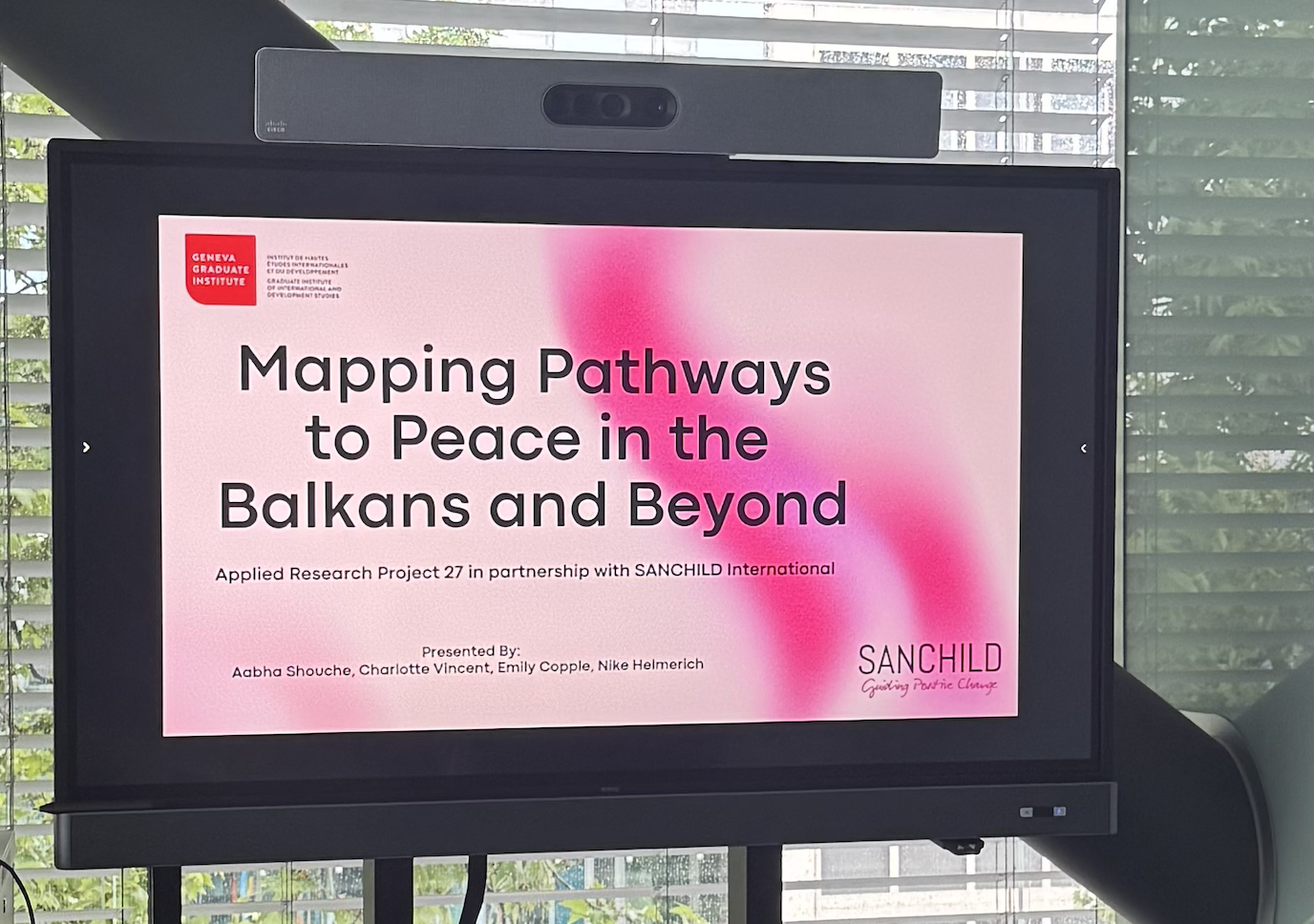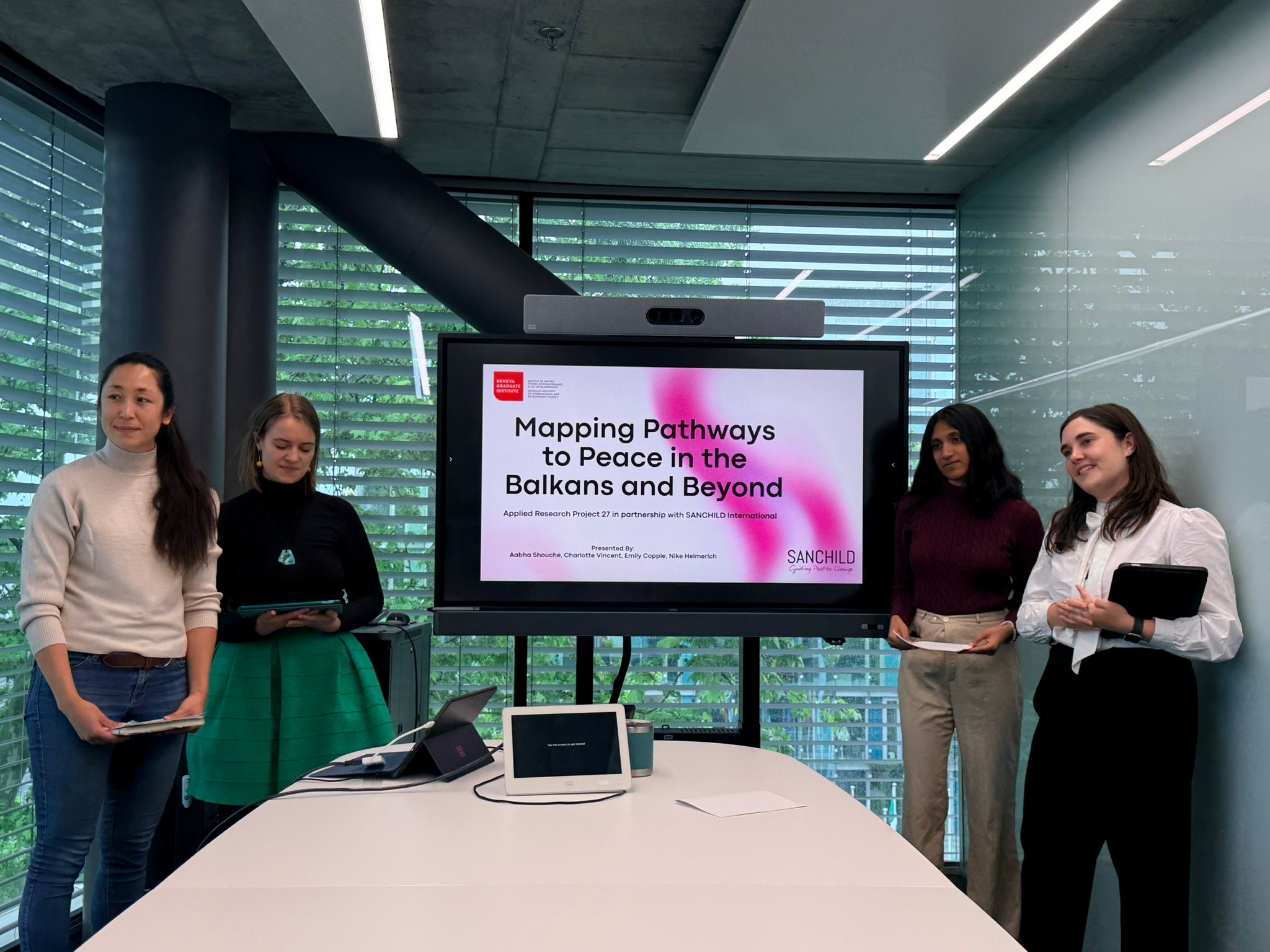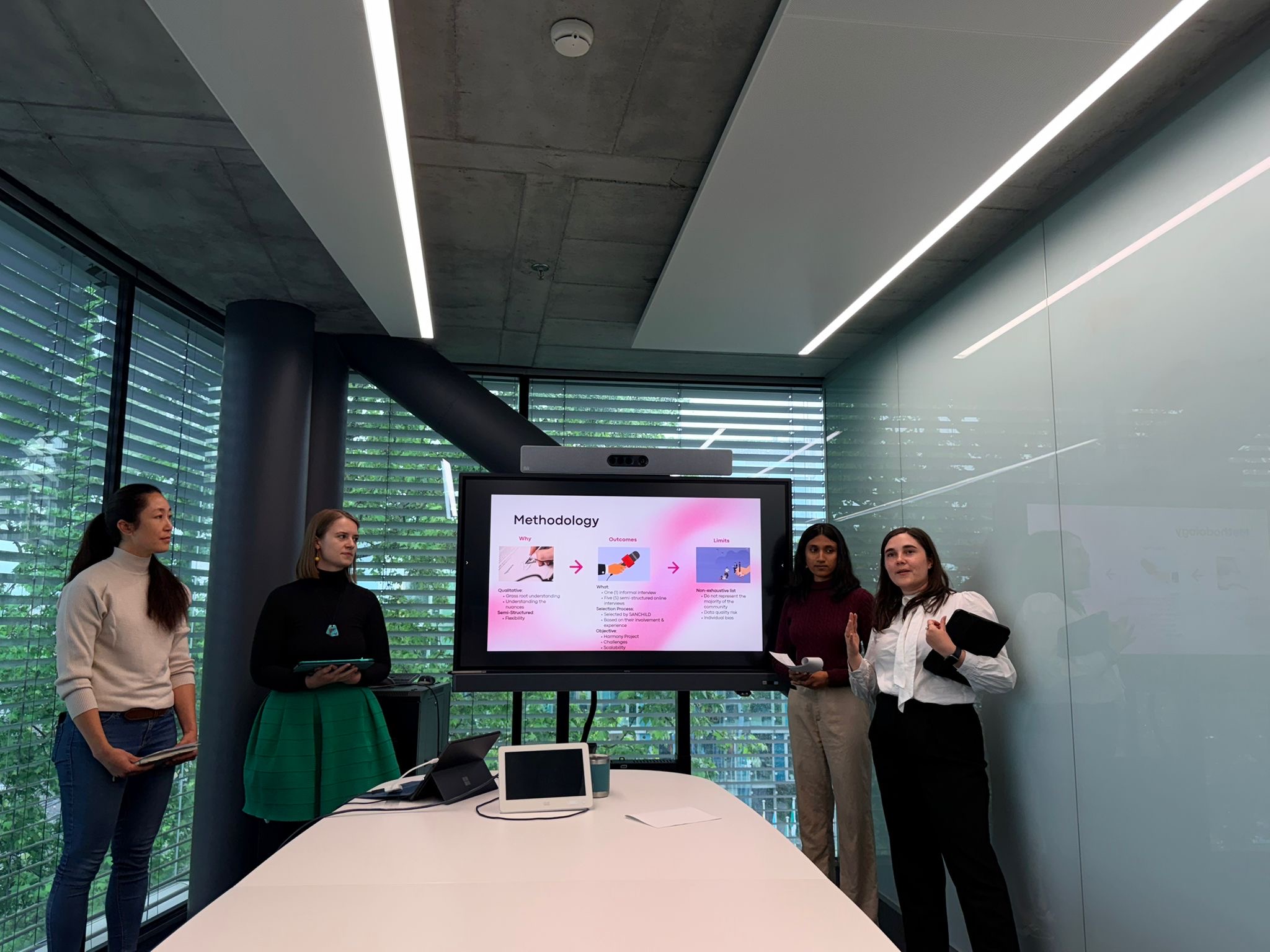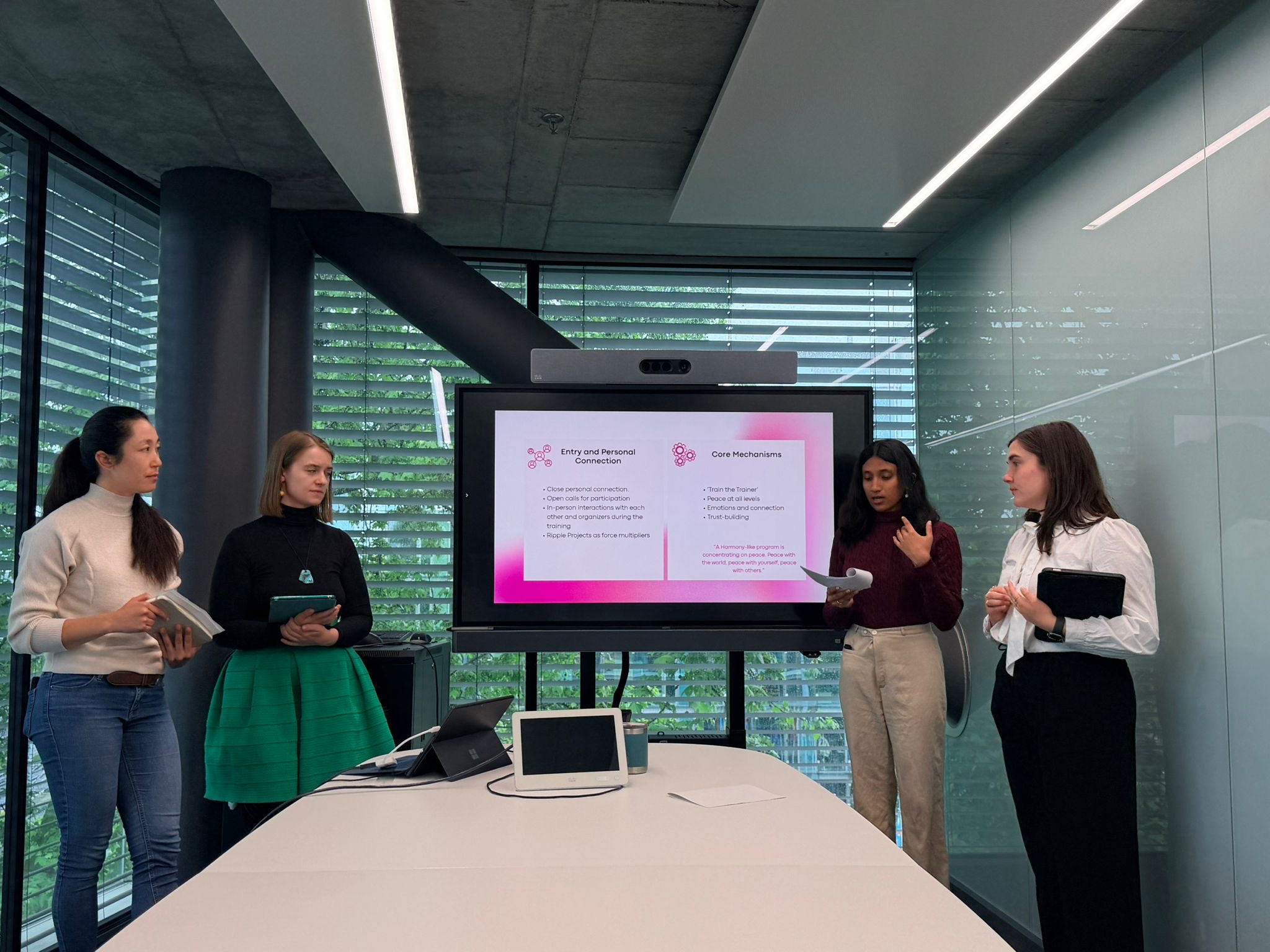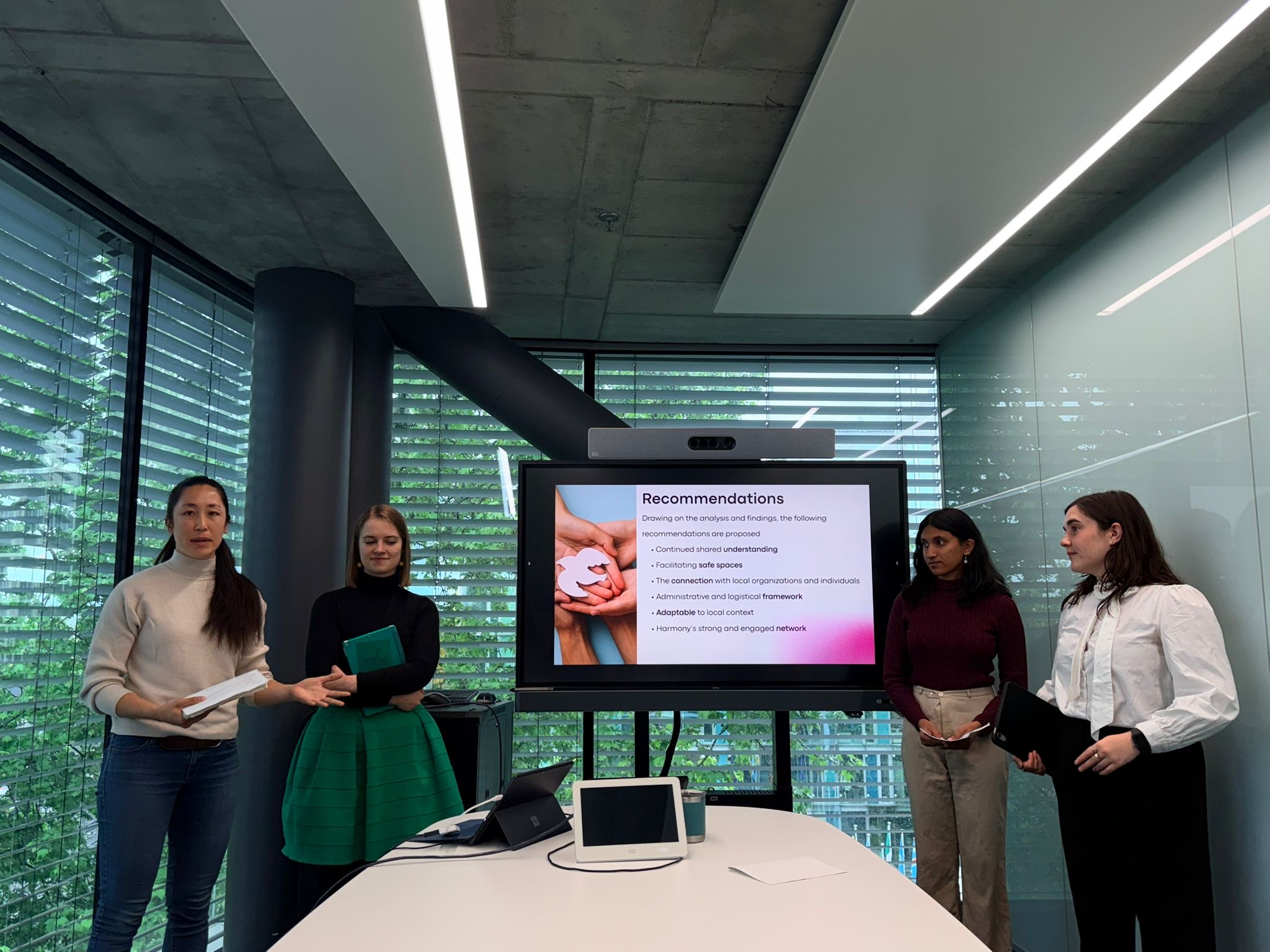
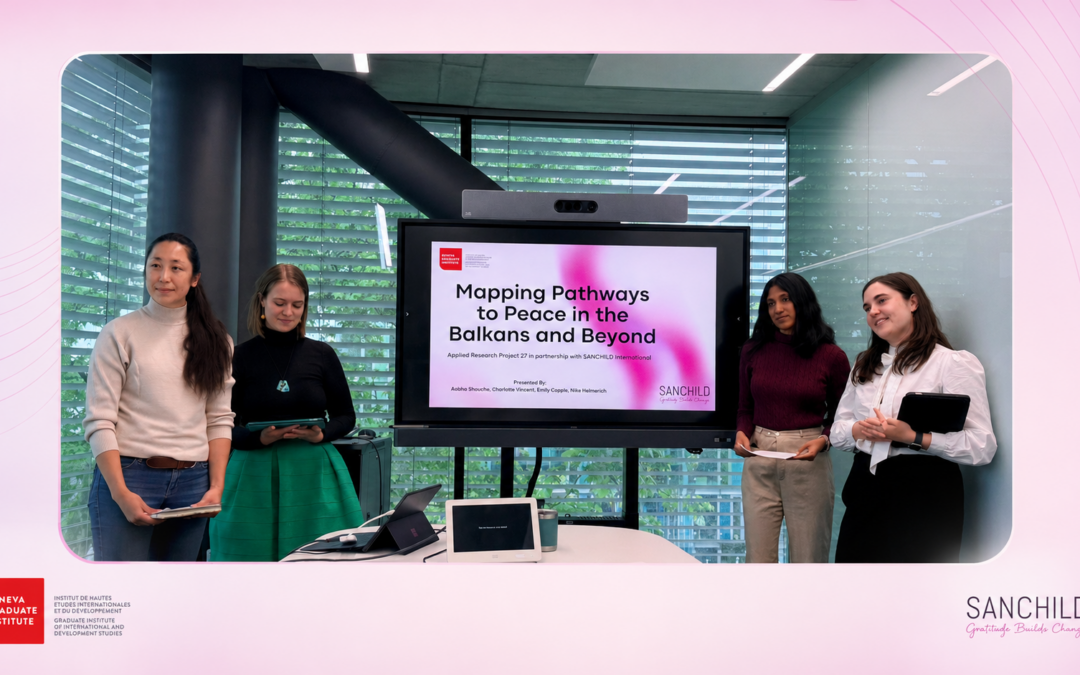
From October 2025 to May 2026, SANCHILD International had the privilege of collaborating with a research team from the Geneva Graduate Institute through Applied Research Project 27.
The final report, titled Mapping Pathways to Peace in the Balkans and Beyond, explored how the Harmony Project contributes to community-led peacebuilding in Bosnia and Herzegovina, and how its approach could be adapted across the Balkans and beyond.
The research was conducted by Aabha Shouche, Charlotte Vincent, Emily Copple and Nike Helmerich, under the faculty guidance of Prof. Eric Degila, with SANCHILD International as the partner organization.
For SANCHILD, this collaboration represents an important milestone in the development of the Harmony Project. It offered a valuable opportunity to pause, reflect, listen, and learn from what has already been created since the first Harmony Train-the-Trainer program and the community-led Ripple Projects that followed.
The research examined the Harmony Project in the context of the Western Balkans, a region where the legacy of conflict continues to shape relationships, institutions and everyday life. As highlighted in the report, lasting peace cannot be understood only as the absence of war. It also requires trust, dialogue, cooperation, emotional resilience and stronger social cohesion.
At the heart of the study was a central question: how can Harmony’s community-led approach contribute to positive peace and support long-term coexistence in divided communities?
To answer this, the research team analyzed the Harmony Project through a Theory of Change framework. This helped clarify how individual transformation, relational trust, local ownership and community action can work together to support sustainable peace.
The report also included interviews with Harmony alumni who had taken part in the program and later implemented Ripple Projects in their communities. Their reflections offered important insights into what made Harmony meaningful: the creation of safe spaces, the importance of emotional awareness, the value of dialogue across differences, and the power of locally rooted action.
Research helps us honor what has been built, understand what can grow, and prepare the next phase of impact with clarity and humility.
One of the report’s key conclusions is especially important for SANCHILD’s future direction: the Harmony Project can offer a scalable model for community-led peacebuilding, but it should not be copied and pasted from one context to another. Instead, its core principles should be preserved while its structure, tools and methods are adapted to local realities.
This finding strongly resonates with SANCHILD’s vision for the next phase of Harmony. As the project prepares for broader regional and international development, the goal is not only to expand. It is to grow with integrity, depth and sensitivity to each community’s history, culture and needs.
The research also emphasized the importance of local leadership, long-term accompaniment and strong networks. These elements are central to the Harmony approach: empowering people who are already rooted in their communities and supporting them with tools, trust and continuity.
This collaboration also strengthens SANCHILD’s contribution to the Sustainable Development Goals, especially SDG 16: Peace, Justice and Strong Institutions, SDG 3: Good Health and Well-being, SDG 4: Quality Education, and SDG 17: Partnerships for the Goals. Through research, education and community-based peacebuilding, SANCHILD continues to connect inner transformation with collective impact.
We are deeply grateful to the Geneva Graduate Institute, Prof. Eric Degila, and the ARP27 research team for their thoughtful work, commitment and care. Their contribution helps SANCHILD move forward with greater clarity, stronger evidence and a deeper understanding of how Harmony can continue to evolve.
This collaboration reminds us that meaningful impact grows not only through action, but also through reflection, learning and the courage to ask better questions.
At SANCHILD, we believe that peace begins within and that research can help us better understand how this inner work becomes a ripple of transformation across communities.